From the Appa archive. This article describes our earlier discovery-call experience; references to that process are preserved from the original.

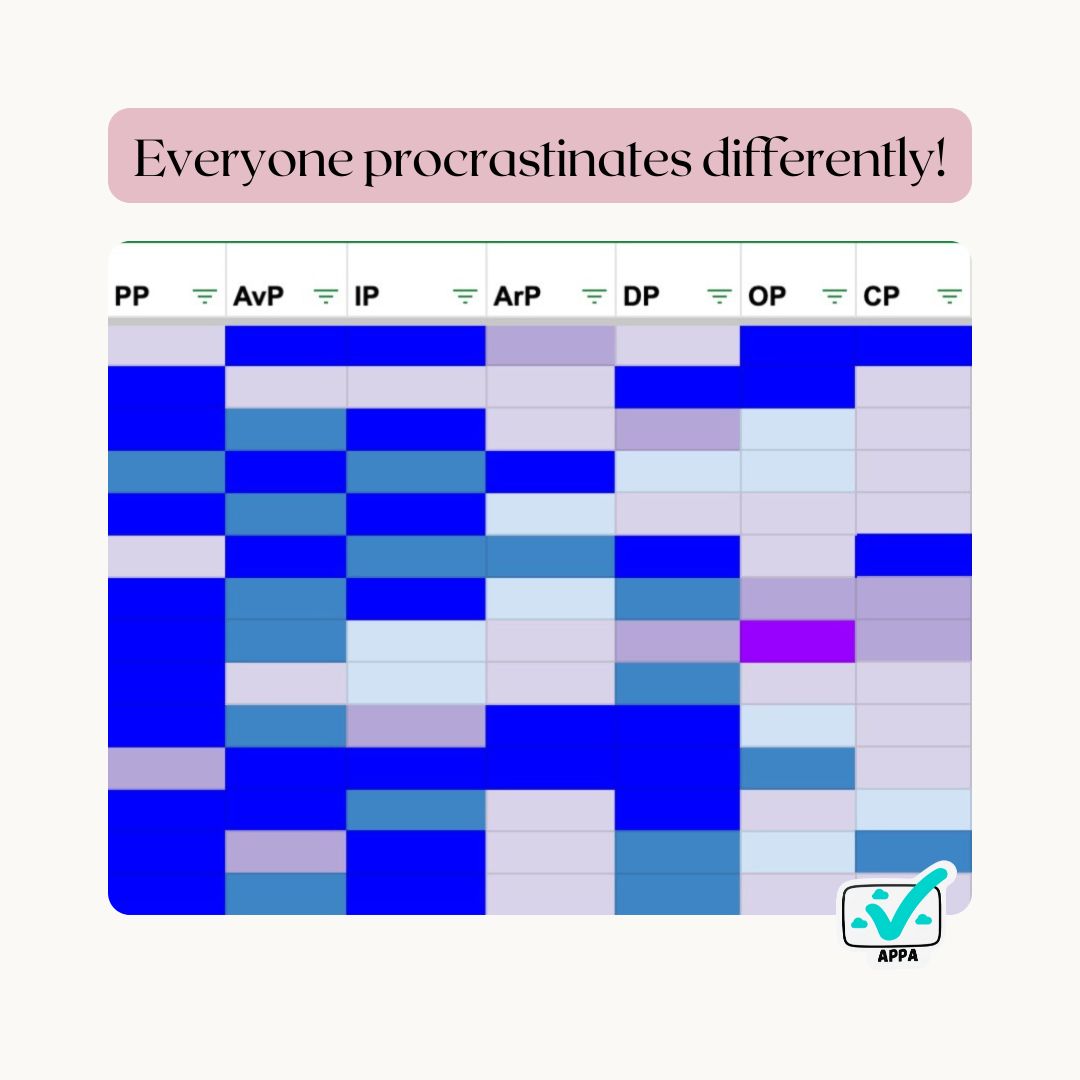
Now that we’ve got your attention, let’s explain what this means. At Appa, we looked into various branches of psychology and what they studied about procrastination. We synthesised this data to highlight 7 distinct procrastinator types. Each type displays distinct tendencies regularly, which leads people to procrastinate. People are a mix of these 7 Procrastinator types. They may display some types prominently, some less or not at all. At Appa, users take a psychometric quiz during their Initial Discovery call. We then provide them with their personalised procrastination profile, which shows them their Procrastination Potpourri. It’s indeed very colourful and diverse.
So, which are these seven wonders of the world of psychology?
Drumroll… Perfectionist, Avoidant, Impulsive, Arousal, Dependent, Overwhelmed, Cultural. Remember the names.
01 Perfectionist
Perfectionist procrastinators tend to have unrealistic, high standards for themselves and their work, be it at home or workplaces or personal life. There can be a fear of failure, judgement or making mistakes. They tend to do a lot of planning or preparation, tend to overthink, over analyse all aspects of problems or situations. They also tend to struggle with delegation of important tasks. They may display a pattern of delay in starting or completing tasks due to the pressure of meeting their own high standards. There's also an all-or-nothing mindset. Either they wish to do a task perfectly or not at all. There's also a pattern of telling themselves, they will do it at a better time, at a perfect time, at a different time, instead of doing things in the present.
02 Avoidant
Avoidant procrastinators tend to have active distraction or productive procrastination as a habit. Some common signs are frequent denial and excuses. Tendencies include chronic lateness/last-minute rush, missing deadlines. If a task or decision feels uncomfortable or difficult, their first tendency is to avoid it. They are not comfortable with things that bring negative emotions like discomfort, failure, making mistakes, and tend to avoid those feelings. They keep postponing tasks by giving many valid reasons why they can’t or won’t or shouldn’t do tasks. They tend to feel anxious or stressed when faced with important decisions and prefer to back out or tell themselves, they will do it later. They shut down conversations or events or decisions that bring out their uncomfortable emotions
03 Impulsive
Impulsive procrastinators tend to forget or lose track of tasks. They do tasks in a spontaneous and unplanned manner. They often struggle with self-regulation, leading to a cycle of impulsive actions. Tendencies include regular distractions, catering to 5-10 things simultaneously, doing active procrastination by doing a lot of things, except the task they’re supposed to do. There can be feelings of resistance or inertia even towards seemingly simple tasks. Common patterns are impatience, lack of continuous focus, getting lost in some action, losing sense of time. They have trouble focusing on 1 thing. Their attentions wander and they tend to look for another thing to do, which would be more interesting than the boring, mundane task they set out to do.
04 Arousal
Arousal procrastinators thrive on the adrenaline rush of working under pressure or at deadlines. They may intentionally delay tasks until the last minute to experience the heightened focus and energy that comes near deadlines. Deadline pressure sparks inspiration or motivation in them to get things done. They find it difficult to start tasks before deadlines, preferring to do them closer to them. Objectively, they would spend less time on tasks or work or actions than people who work consistently before a deadline. They believe they do things better than others even if they do them at the end moment. Deadlines drive them, they don’t feel motivated before deadlines.
05 Dependent
Dependent procrastinators depend on others to get tasks done. They tend to display dependence, reliance on others to not procrastinate. They procrastinate where reassurances, decisions or approval from others are involved. They may rely on others to motivate or guide them in completing tasks. They may delay taking action until they receive external reminders, support, or deadlines or clarity or directions from others, leading to a lack of personal initiative. Internal motivation comes sparsely or unreliably. External motivation is a driving factor for getting things done.
06 Overwhelmed
Overwhelmed procrastinators face a freeze response when they feel a lot of tasks are to be done. They may feel frozen even when faced with seemingly simple tasks. They feel overwhelmed by just thinking about their pending work or decision. They prefer to shut down and push the tasks to later. They experience high stress or anxiety when faced with even small tasks. They tend to get overwhelmed if their to-do list becomes too large and then find it very difficult to even get started with 1 task. They experience peace and calm when they don’t think about any task. That temporary relief is important to them and they prefer it over facing things they’re putting off.
07 Cultural
Cultural procrastinators is the only subjective Procrastinator type because the root cause is unique to a particular person's belief system, but the patterns displayed remain similar across cultural procrastinators. Cultural procrastinators may come from environments or surroundings or societies that make them normalise or even encourage procrastination. Common tendencies include delaying tasks because they perceive deadlines as flexible or not important or believe that waiting until the last minute is a sign of resourcefulness. Tendencies include rebelling against any perceived authority, wanting autonomy or spontaneity. Another trait is beliefs that are ingrained, or rationalisations that make them do procrastination like - I am lazy, I am chill, things will work out eventually, I am not affected by this. They may believe that procrastination is good and hence procrastinate frequently.
It is very important to remember that these tendencies are not Good or Bad, Right or Wrong in themselves. Many times, these are a person’s strength. Hence, it is important to view them in the context of Procrastination. When they put off tasks that they really wish to do again and again, where they delay things even when it’s negatively affecting them frequently. When they keep thinking about doing something, but not actually doing anything about it. At Appa, we ONLY work on the tendencies, when a user wants to work on them in the context of a task, in ways that work for them.
So, what are you waiting for? Book a discovery call with us today! Or, do it tomorrow 😛