FROM THE APPA ARCHIVE
From a Call to Code: Building AppaClub
Original Appa article. Archived wording retained for editorial review.
It started with a call.
There was no pitch deck, no polished roadmap. A conversation that sparked an idea. What if procrastination was treated as a complex problem with layered root causes? Instead of a simple one confused with Productivity, Laziness, Lack of motivation, Deprioritisation?
That call by Rucha Walawalkar became the starting point of what is now AppaClub.
Day 0 → Day 10: Getting Something Real Online
Like most early-stage builds, we didn't start with scale. We started with existence.
- Deprecating no-code website on Weebly
- Bought a domain on GoDaddy
- Pointed it to a basic landing page
- Eventually turned it into a working site: AppaClub website
- Using Gallabox for automating WhatsApp conversations
The real challenge was not hosting a website, but making it interactive enough to reflect the product idea: Helping people act.
Here's one of our early Founder's videos for YCombinator that we recorded over a year ago:
The Hard Part: Making Interaction Feel Human
Static websites don't solve procrastination. Behavior change needs friction, feedback, and emotional trust.
We started layering interaction:
- Signup flows that weren't just forms, but self-reflection prompts
- Dynamic onboarding journeys
- Testimonials tied to real outcomes (not generic praise)
- Early attempts at “guided action” through UI
At this stage, even small decisions mattered: Should users pick one task or multiple struggles?
GitHub As Our Second Brain
We created an organization on GitHub and started tracking everything as issues.
Not just bugs — thinking.
Some of our early product questions (logged as issues):
1. Redesigning the Signup Flow
We moved from generic input fields to intent-based choices:
- “Help me with one task”
- “I'm a chronic procrastinator”
- “Help me understand my patterns”
This single change reframed Appa from a tool → a personalized system.
2. Building Trust in Real Time
We realized users hesitate most while filling forms. So we added:
- Trust signals during signup
- Messaging like: “Your assigned buddy will reach out”
- Clear communication channels (WhatsApp / Telegram choice)
3. Making the Product Tangible
Abstract promises don't convert. Real examples do. We introduced:
- A scrolling panel of actual procrastinated tasks completed
- Tagged testimonials (so users could relate to specific problems)
4. Monetization Experiments
Instead of forcing subscriptions, we explored flexibility:
- Pay per task
- Monthly plans
- Free trial with minimal friction
Even small wording changes mattered: “Choose your plan” instead of “Subscribe”.
Feedback Loops: Where the Real Learning Happened
We spoke to users constantly. Some insights that changed the product:
- “I don't have time to fill long forms” → simplified signup
- “Too much text” → reduced cognitive load
- “Font too small” → responsive UI fixes
- “What are calls for?” → clarified product expectations
- “Don't spam me” → emphasized non-intrusive support
One user compared us to insurance onboarding + therapy + accountability apps.

Subtle But Important Product Shifts
Some small changes had outsized impact:
- “Discover your procrastination” → “Sign up” (clarity > cleverness)
- “Habits” → replaced with “tendencies” (more accurate framing)
- Added celebration moments (signup fireworks 🎉)
- Gentle Nudge: Thinking, ‘Maybe later’? Now is the perfect time to join! Join the waitlist today.
Even language became part of product design.
The System Behind the Scenes
While the frontend evolved, we quietly built:
- Admin panels
- Task tracking systems
- Communication routing (WhatsApp / Telegram)
- Country-aware onboarding
We're no longer just a website. We are becoming an operational system that helps do what you say.
Where We Are Now

We've moved beyond just a website. We now have:
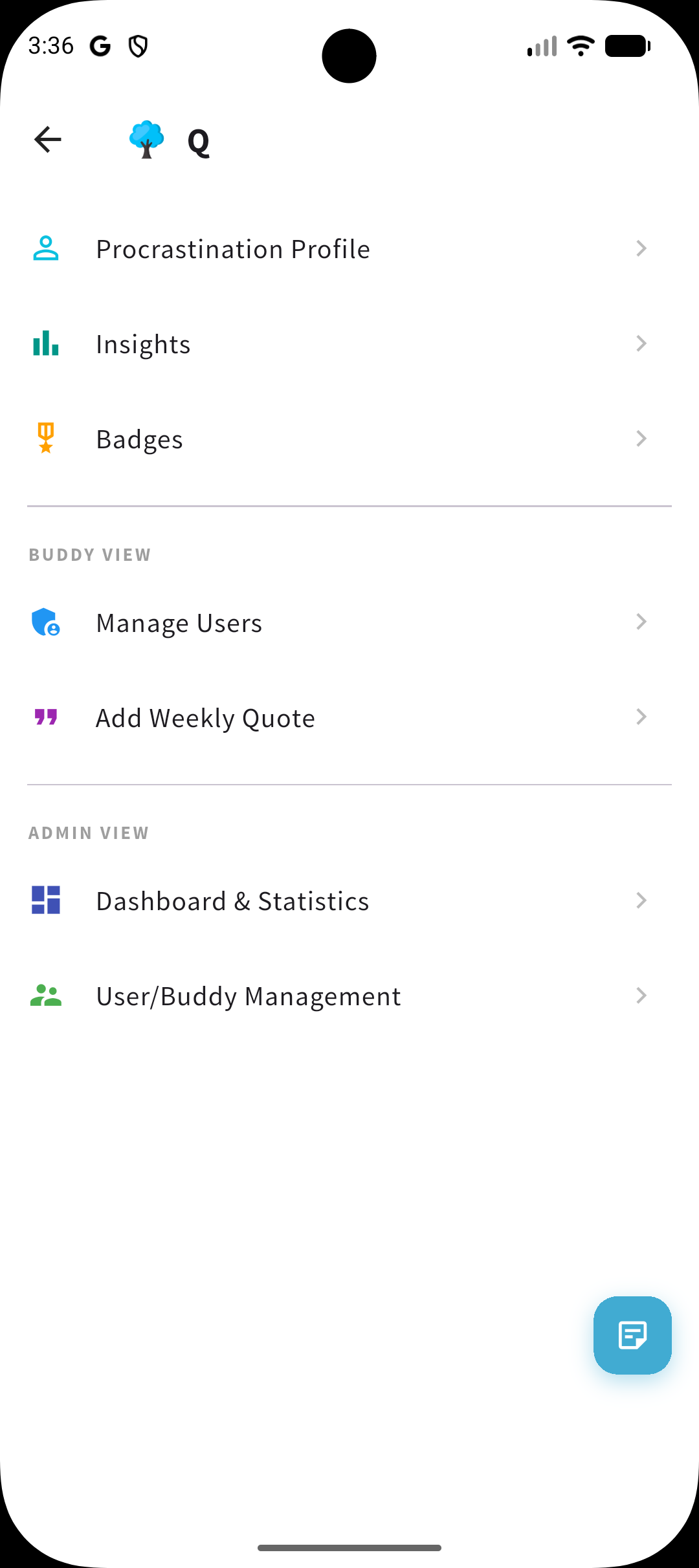
- A Flutter app (real product layer)
- Messaging-based flows
- Early AI-driven insights on user behavior
Version 1 is Live. Version 2 (shipping soon) is shaped almost entirely by what users actually needed.
What Changed the Most
At the start:
“Let's build a platform to help people stop procrastinating.”
Now:
“Let's build a system that understands how people procrastinate and intervenes at the right moment.”
That shift changed everything:
- UX decisions
- Messaging
- Architecture
- Roadmap
One of the snaps of our V2 app — can't let everything out.
What's Next
We're now moving towards:
- Deeper behavioral insights (AI layer)
- Stronger buddy-system mechanics / Anonymous Community and DIY flows
- Reduced friction in action-taking
We'll share more once V2 rolls out — along with DIY screenshots and architecture flows. Till then, see our product demo:
Want to know more? Reach out to us on: